
GMHED Collaborations
GMHED is currently active at two sites in RLS: Ghana and India.
Each site is in different stages of progress within the GMHED framework.
Ghana
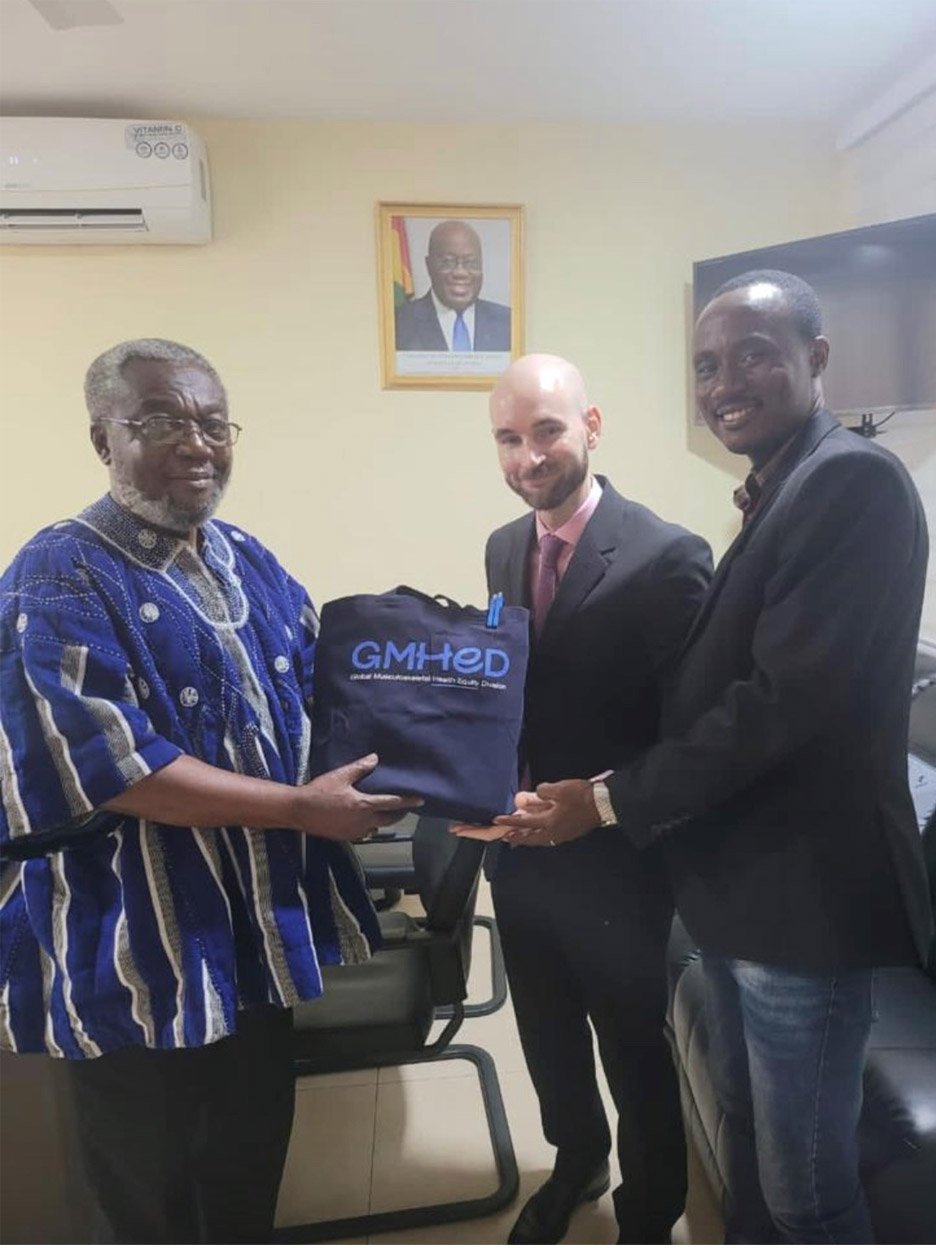
The Republic of Ghana has a population of 31 million and is situated along the Gulf of Guinea in West Africa. Ghana is a multinational state that gained independence from the British in 1957. The government is a unitary constitutional democracy, and English has been adopted as the common language. With respect to musculoskeletal disease, the burden of trauma, chronic degenerative states and congenital deformities is high, but much of the infrastructure and workforce needed to care for these conditions is lacking. GMHED currently collaborates with the two largest teaching hospitals in Ghana. Our programs there focus on increasing the orthopedic surgery and anesthesiology workforce by training local doctors and conducting research.
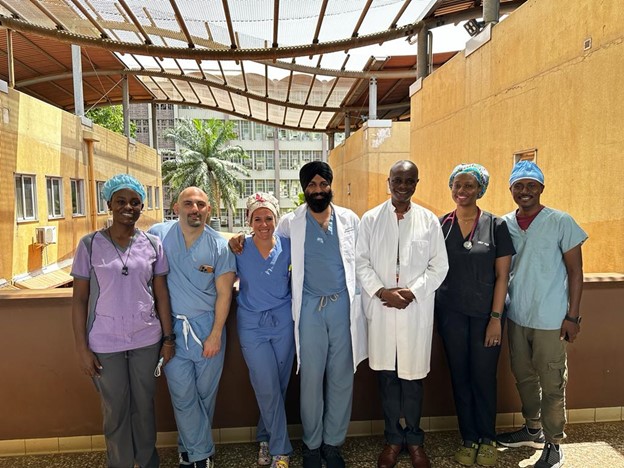
Komfo Anokye Teaching Hospital (KATH): Kumasi, Ghana
HSS and KATH began working together in 2017, though Dr. Brouillette has led several US academic centers’ global health programs with the KATH Directorate of Trauma and Orthopaedics and Directorate of Anaesthesia & Intensive Care. KATH is a 1,200-bed academic center built in 1952 and located in the city of Kumasi. KATH is the primary referral center for the northern two-thirds of Ghana and the teaching institution for the Kwame Nkrumah University of Science and Technology Medical School. More than 10,000 surgeries are performed at KATH annually; 16% for musculoskeletal conditions, many of which are road traffic injuries. KATH offers postgraduate medical training in most disciplines, including Trauma & Orthopaedics and Anaesthesia & Intensive Care.
GMHED Progress
Regional Anesthesia
- Carried out GRACE training in ultrasound-guided regional anesthesia to Anesthesia department at KATH from 2017 – 2023
- Developed a Regional Anesthesia and Chronic Pain Fellowship at KATH from 2021 – current
- KATH Fellows: Obiageli Ofungwu, MD, Sophia Ankrah, MD, Gifty Sarpong, MD
Leading Pain Management
Dr. Harman Singh is currently leading the pain management global health initiative to establish and validate a framework for improving chronic pain care access through partnerships, education, training and capacity building in resource-limited settings. Currently, he is collaborating with Komfo Anokye Teaching Hospital (KATH) in Ghana to help establish a chronic pain division, train new pain management fellows, increase chronic pain management capacity, and improve access to care for patients.
Pharmacy
Dr. Jawad Saleh is leading GMHED’s pharmacy branch. He has focused on areas such as global pharmacy assessments and standardization efforts to significantly improve healthcare outcomes in under-resourced regions, ensuring equitable access to quality pharmaceutical services and contributing to overall health system strengthening.
Surgery
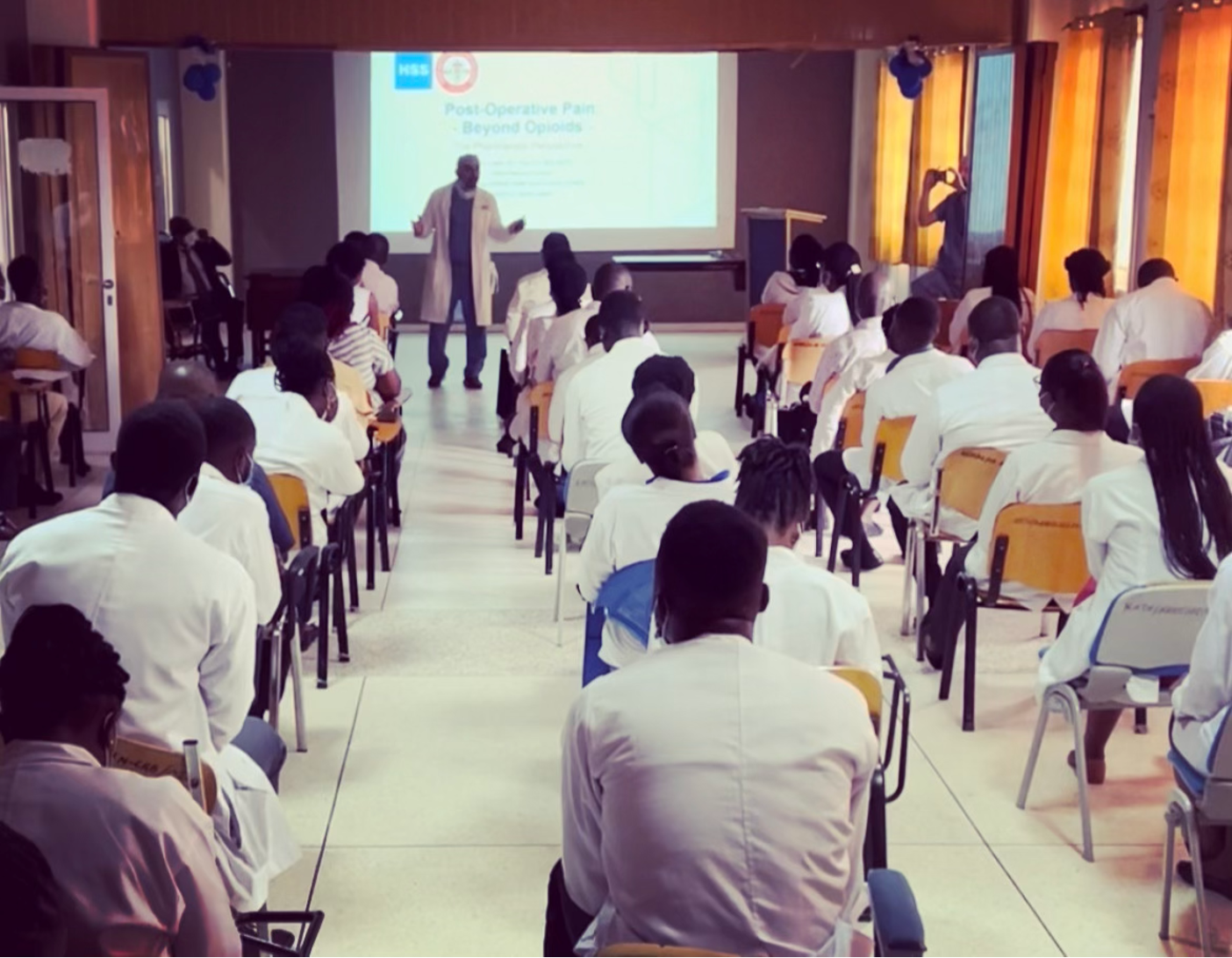
Based on our unique needs assessment, including input from the government to the local interests of nurses and surgeons we idenitified the need for subspecialty fellowships in all fields of orthopaedics (they currently have only generalists) with the plan to make Komfo Anokye Teaching Hospital a center of orthopaedic excellence. This involves partnerships with Harvard and University of Calgary, for domains like musculoskeletal oncology and sports medicine, as well as internal partnership with Foundation for Orthopaedics and Complex Spine for planned spine and arthroplasty fellowships.
This year we started with our trauma program, using an OTA-based curriculum developed in concert with the Ghanaian College of Physicians and Surgeons. Dr. Andrew Grose is supervising this, with visiting experts from Netherlands (Diederik Verbeek & Peter Kloen), Canada (Geoffrey Wilkin & Allan Liew), and the US (David Wellman, Gele Moloney, Jaimo Ahn, Milan Sen, Kanu Okike, Jason Mckean and Charles Cornell).
With respect to the orthopaedic aspect of our work in Ghana, this project includes training of nursing, surgical techs, central sterile professionals, and will also include upgrades to anesthesia machines, OR tables, and hopefully new central sterilization systems. We have also worked to find cost-effective but good quality instrument/implant supply to make this sustainable within the Ghana economy.
India
India, officially called the Republic of India, is the seventh largest country by area, the second most populous country and the largest democracy in the world. It is a pluralistic, multilingual, and multi-ethnic society. India has become a fast-growing major economy and a global hub for information technology services. Despite the economic advances, India is also overwhelmed by unyielding poverty, both urban and rural. Additionally, religious and caste-related prejudice permeates many sectors of society. In poverty-plagued communities, healthcare resources and workforce are dire, which leads to a high burden of disease. Musculoskeletal disease, particularly trauma, comprises a large proportion of unmet need.
Osmania General Hospital (OGH): Hyderabad, India
HSS and OGH began working together in 2019 when the HSS anesthesia Global Health Initiative (GHI) introduced the GRACE training model to the OGH department of anesthesiology. OGH is the second largest government hospital in South India and provides free medical care to the indigent population of Hyderabad and the surrounding areas. OGH houses 1,000 beds within three specialty buildings, has 62 operating rooms of various specialties and performs roughly 62,000 surgeries per year. OGH offers the premier anesthesiology residency training program in South India, with approximately 90 new residents annually. Although physician anesthesiologists have been performing regional anesthesia techniques for several years, there is a large variability in skill and success rates among practitioners. The OGH faculty therefore sought to collaborate with GHI to improve their knowledge and skill level.
India GMHED Progress
Regional Anesthesia Training program
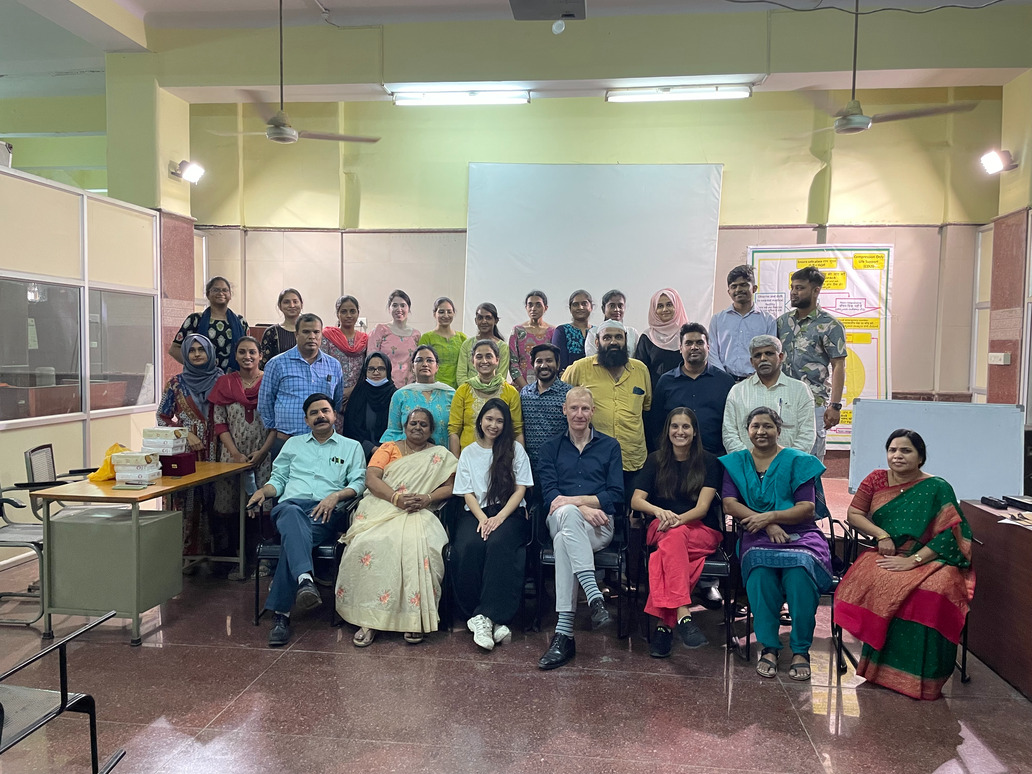
Initiated the GRACE Training Protocol to teach ultrasound-guide regional anesthesia to a group of 14 members of the OGH Anesthesia Department.
- Taught the program from 2019 to 2023
- Currently evaluating the uptake and dissemination of GRACE skills at OGH
Point of Care Ultrasound (POCUS) Training program
Point-of-care ultrasound (POCUS) has become quite popular in the U.S. because of its wide range of uses and benefits. However, in the field of anesthesiology, there is a lack of standard practice and training, especially in low-resource settings. Additionally, the utility of POCUS is tremendous in RLS, as the modality enables immediate diagnosis and intervention without the need for prohibitively expensive imaging. We conducted an assessment at Osmania General Hospital (OGH) to understand the specific training needs for POCUS. This helped us create a tailored training program that fits the needs of these settings and ensures it is sustainable. The GMHED team organized a week-long, hands-on training course for POCUS in February of 2023, which included fellows, experienced anesthesiologists, and POCUS experts. We collected and analyzed data before and after the training to measure its effectiveness. We returned to OGH for a follow-up refresher course in December 2023. Our experience in India helped us develop a blueprint for POCUS training that can be used in other low-resource settings.
Trauma Surgery
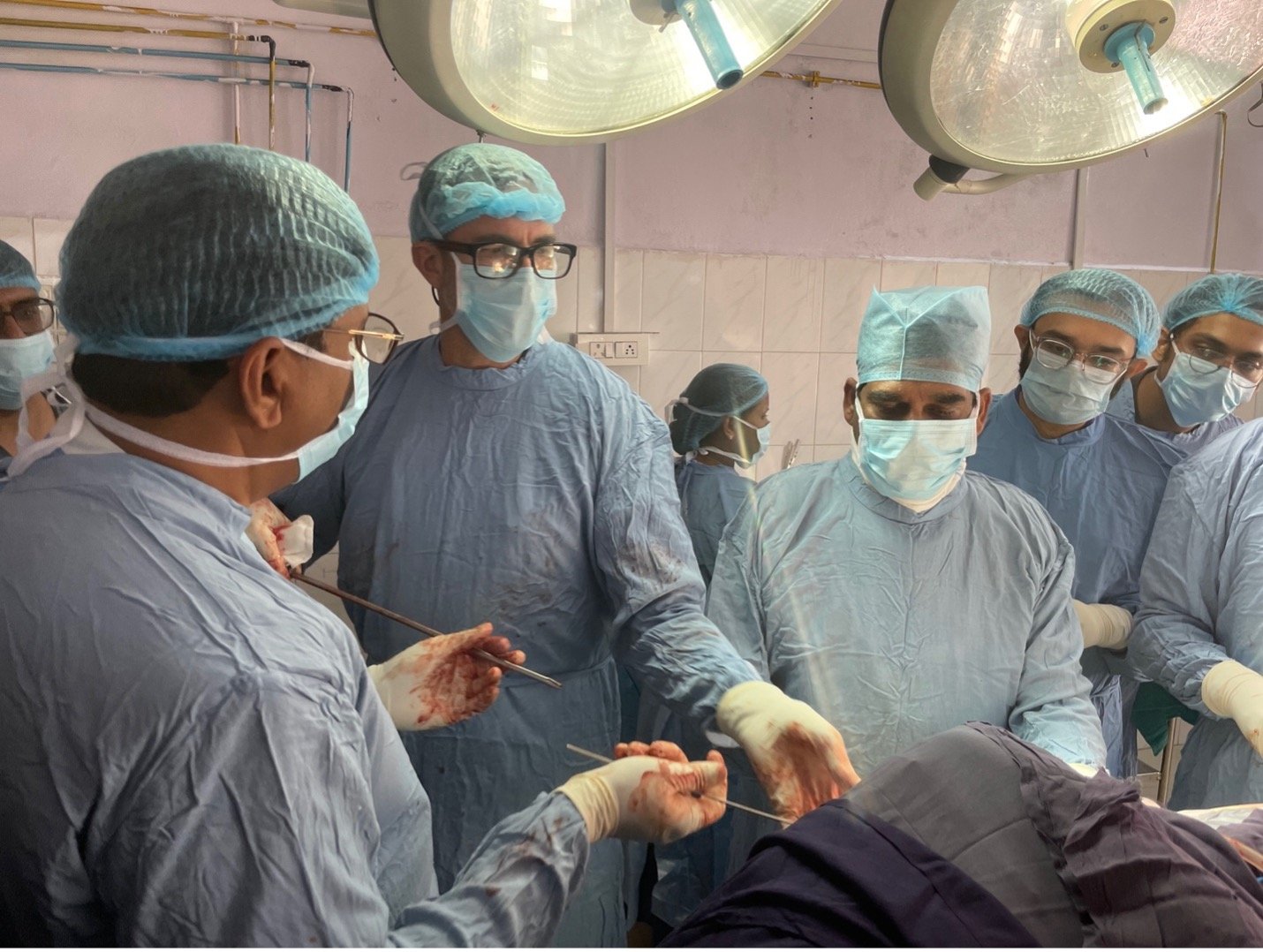
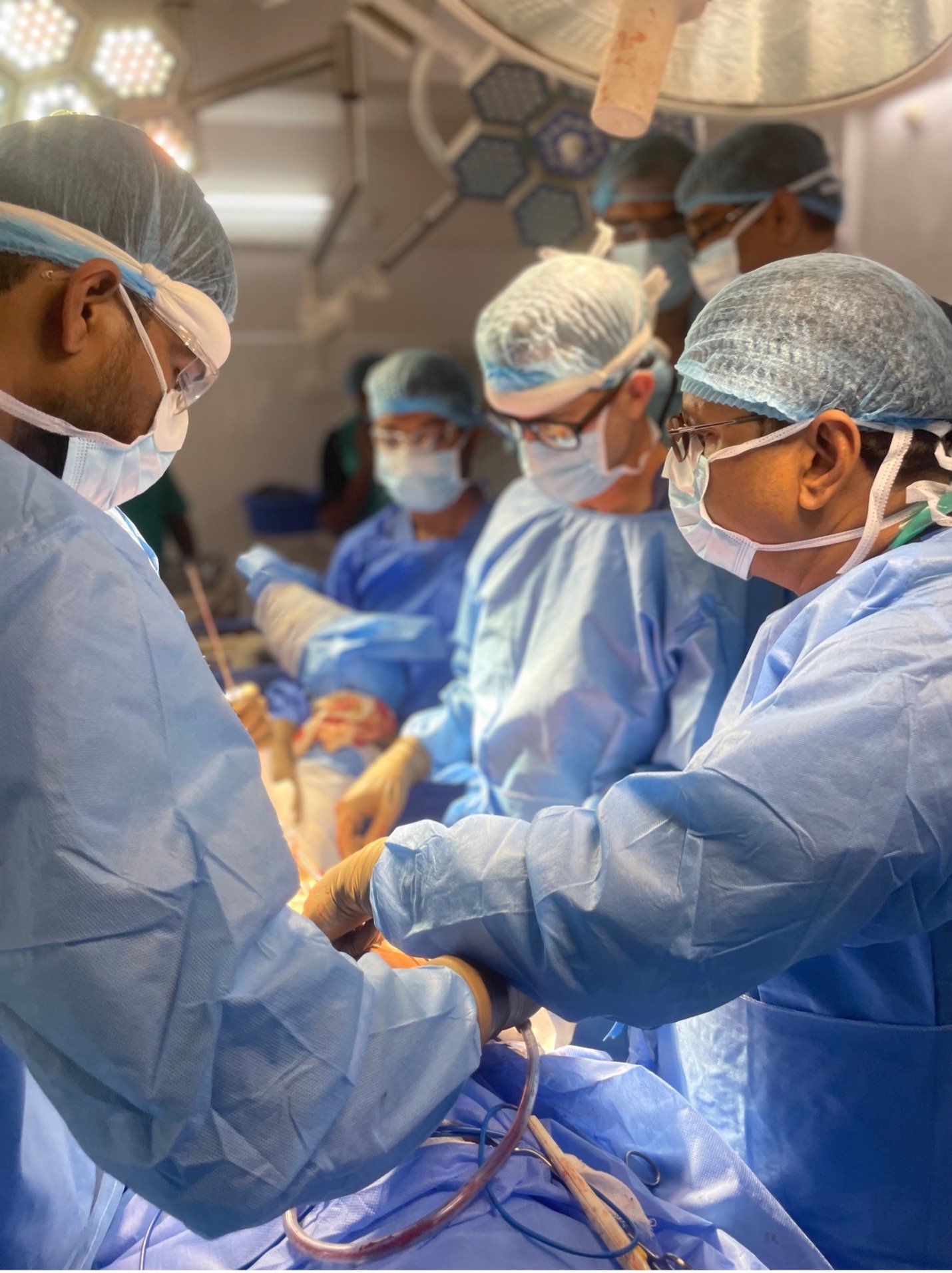
We are currently in the needs assessment phase for trauma at OGH. Dr. Jason Mckean teaches orthopedic trauma at OGH while assessing their needs.
link